
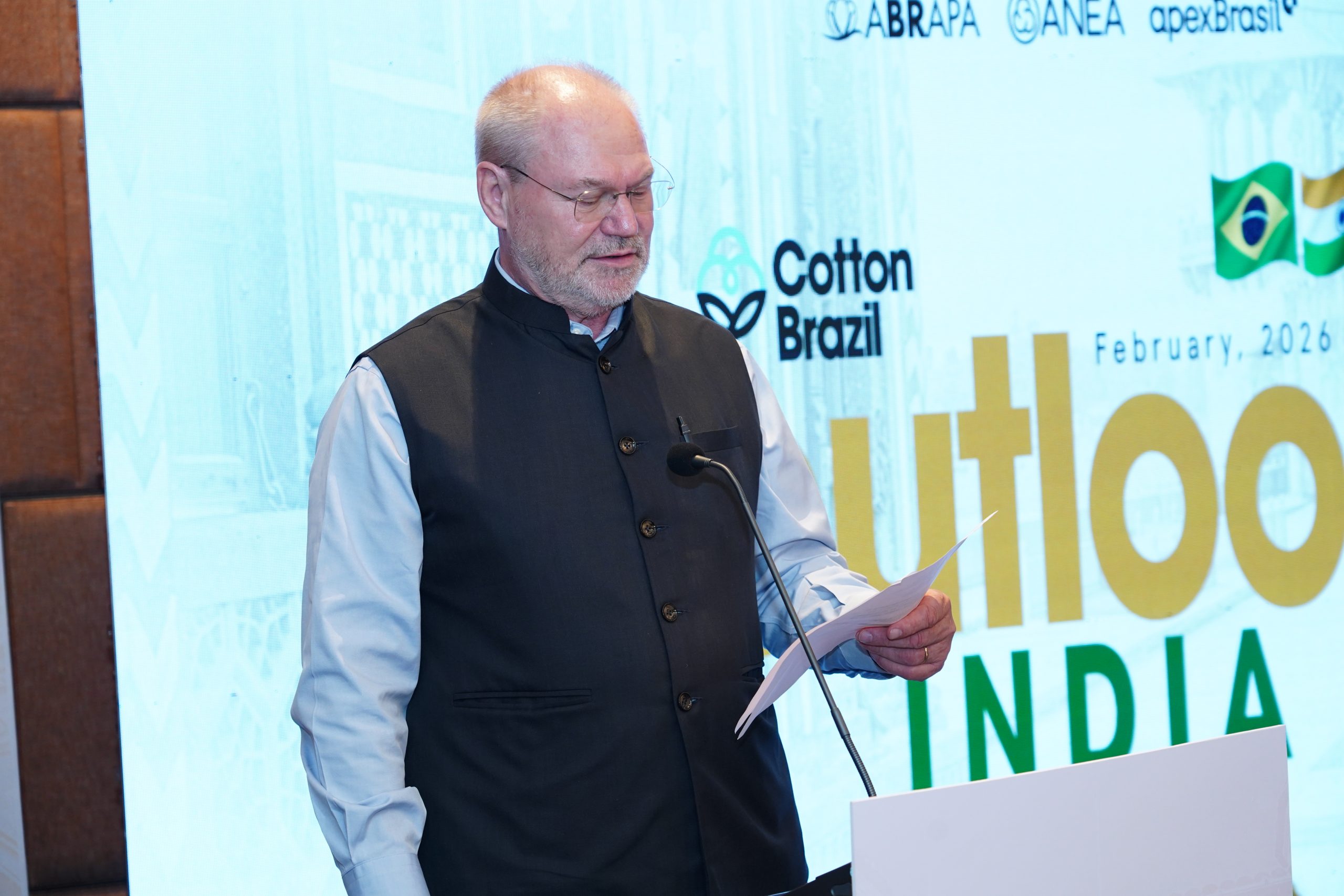
The Brazilian delegation’s agenda included meetings with more than 200 local leaders and efforts to secure improved tariff conditions for bilateral commerce
Cotton Brazil returns from its mission to India reaffirming Brazilian cotton as a competitive supplier in the global market, with real capacity for expansion. According to the vice president of the Brazilian Cotton Growers Association (Abrapa), Celestino Zanella, India aims to reach US$ 100 billion in textile exports over the next five years, which is expected to significantly boost the country’s demand for cotton.
Currently, the Asian country consumes around 5.5 million tons of fiber, but there is potential for this volume to reach 16.5 million tons within the same period. This growth opens a strategic window for Brazil, which could capture between 1.5 and 2 million tons of this additional volume in the coming years.
According to Zanella, even under a more conservative scenario, with growth one-third lower than projected, the additional volume would still represent a relevant opportunity for Brazilian cotton in the Indian market. Currently, India is the fourth-largest importer of Brazilian fiber.
“India is a very special destination for us. It has one of the most important cotton qualities in the world and is recognized for its powerful textile industry. We are very happy to be here and to strengthen the ties between the two countries,” he said.
Director of International Relations at Abrapa, Marcelo Duarte, highlighted the advances and improvements in India’s sector in recent years and the importance of the partnership: “We know how knowledgeable Indians are about cotton and how important cotton is in the local culture. So being able to supply cotton to a country that has cotton in its heart, the heart of its society, is really an honor for us.”
Opportunities for Brazil
Abrapa board member Luiz Carlos Bergamaschi reiterated the potential to expand Brazilian cotton’s participation in the Indian market. “India is a major producer, both of cotton and in the textile industry, and Brazilian cotton can participate both as a complement to local production and in supplying the industry. It is also an opportunity given the advantages Brazilian cotton has in delivering quality to the local textile industry.”
“We visited several cities, understood the sector’s demands and needs, and we still have a lot of work to do. However, considering the estimates presented to us regarding increases in production and consumption, I believe there is a great opportunity for Brazilian cotton to expand its presence in this market and add value to our fiber,” he added.
Toward a Zero-Tariff Framework
The mission to India was divided into four stages. The first was Cotton Brazil’s participation alongside the official mission of the Brazilian government in New Delhi. Amid discussions on the expansion of the trade agreement between Mercosur and India, Abrapa formally requested the inclusion of cotton in the list of products covered by the expanded agreement.
The proposal seeks to reduce the current import tariff applied by India to Brazilian cotton — currently 11% — to a preferential zero tariff, thereby increasing the competitiveness of the Brazilian product in the Indian market.
According to Cotton Brazil manager Fernando Rati, the group presented a study on the complementarity of Brazilian cotton with the Indian textile industry, highlighting Brazil’s strategic role as a supplier in terms of high cost-benefit origin, quality, sustainability and traceability. “We joined the presidential mission to further reinforce this request and to follow up with Brazilian diplomatic authorities on the importance of including cotton on this list,” he emphasized.
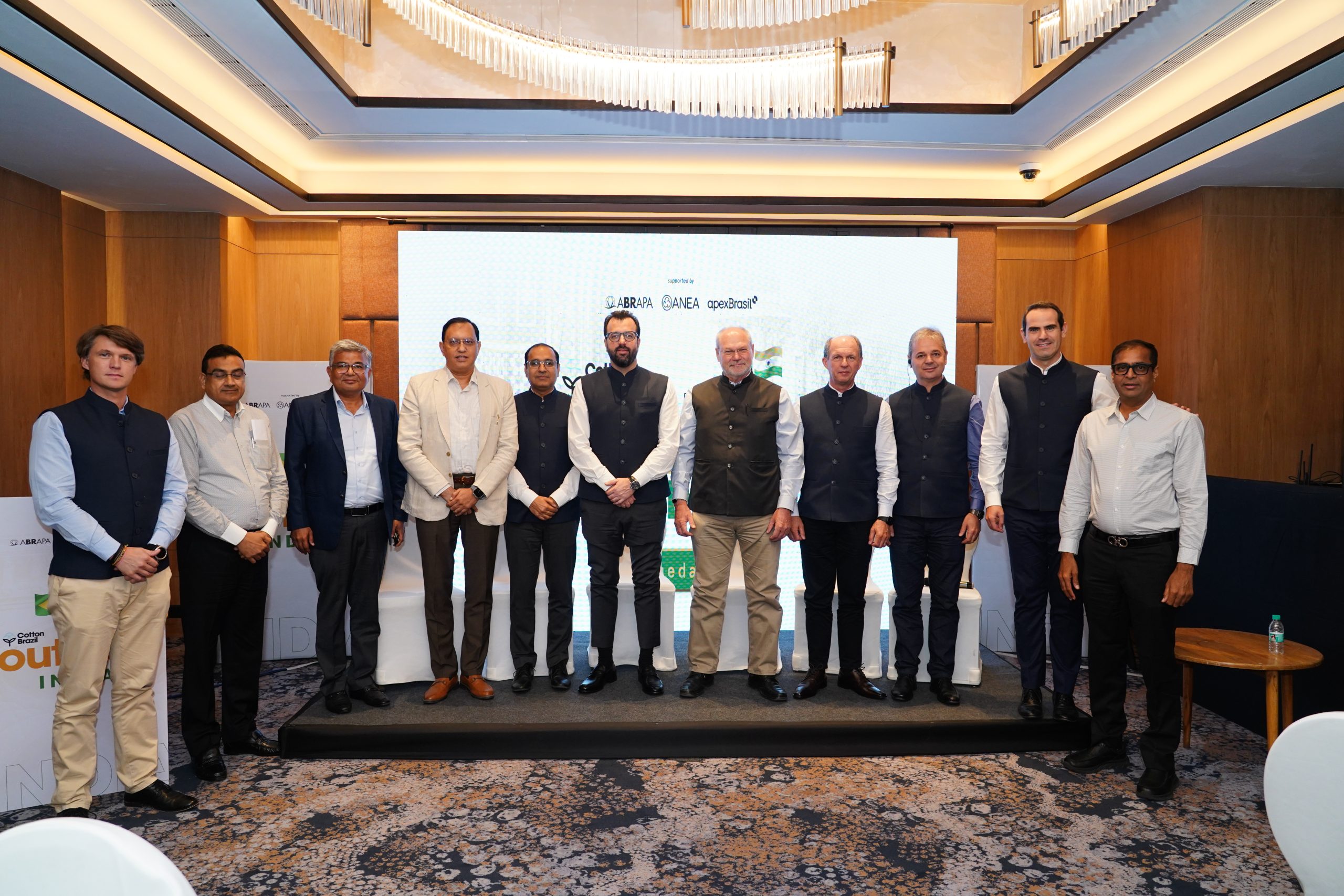
More than 200 Textile Leaders Engaged
The mission also included three editions of the Cotton Brazil Outlook, featuring presentations on quality, compliance and sustainability data related to Brazilian cotton, as well as technical workshops aimed at Indian spinning mills. The itinerary covered the three main textile industry hubs in India — Ahmedabad, Mumbai and Coimbatore.
Throughout the mission, the Cotton Brazil delegation engaged with more than 200 strategic leaders, including representatives of the textile industry, government authorities and other key stakeholders in the sector.
“India is a major buyer of Brazilian cotton. If Brazil continues growing, I don’t see this happening without India participating as well. We are very happy to be here, exchanging information about Brazil, understanding the Indian market, and learning how we can improve Brazilian cotton to gain market share in India,” Rati said.
Ripple Patel, Founder and Managing Director of Fiotex Cotspin, praised the quality of Brazilian cotton and highlighted the desire to visit Brazil in order to continue strengthening this exchange. “It was actually mind-blowing when we see the numbers and how they have managed yields and the area, and only 1% of the crop is cotton. It’s a fabulous story of an agricultural product. And I think cotton is not an agricultural commodity, it’s an industrial commodity.”